
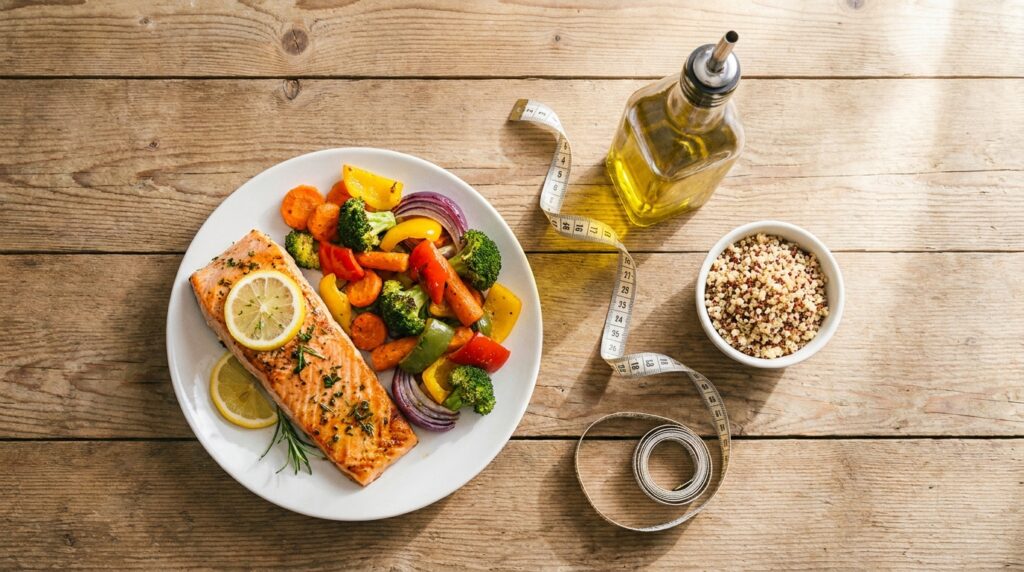
Diet to lose weight is one of the most searched topics on the internet — and for good reason. Millions of people wake up every single morning ready to make a change. They cut back on snacks, skip dessert, maybe even lace up their sneakers. And then… nothing. The scale just sits there. Unmoved. Mocking them.
Sound familiar?
If you’ve been through that cycle — motivated Monday, frustrated Friday — you are absolutely not alone. The truth is, losing weight isn’t just about willpower. It’s about understanding how your body works, choosing the right eating pattern, and getting the right kind of support.
This guide is going to walk you through everything. No confusing jargon, no miracle promises. Just real, science-backed steps you can actually use starting today.
Let’s get into it.

Table of Contents
Why Is Losing Weight So Hard? (It’s Not Your Fault)
Here’s something most diets never tell you: your body does not want you to lose weight.
Seriously. Your body is wired for survival. When you start cutting calories, it reads that as a warning sign. A threat. It thinks you might be heading into a famine, so it shifts into protection mode — slowing down how many calories it burns just to keep you going.
This is what scientists call metabolic adaptation. And it’s a big reason why so many people hit a wall, even when they’re eating less.
Think about it this way. You start a low calorie diet, you drop a few pounds in week one, and you feel amazing. Then week three arrives. The scale stops moving. You’re doing everything the same — but your body has quietly dialed back your metabolism to match. It’s fighting you.
This isn’t a personal failure. It’s biology.
The good news? Once you understand this, you can work with your body instead of against it. And that’s exactly what the best diets are designed to do.
For a deeper look at how the body responds to calorie restriction, the Weight Loss: The Complete Clinical Guide for 2026 is a great place to start.
The Plateau Problem: Why the Scale Stops Moving
Let’s talk about the plateau — that dreaded moment when your progress just… stalls.
Here’s what’s happening inside your body when you’re on a low calorie diet for a few weeks:
- Your resting metabolic rate drops. This is the number of calories your body burns just keeping you alive — breathing, pumping blood, keeping organs running. When calories go down, so does this number. Some studies show it can drop by as much as 300 calories per day.
- Hunger hormones go haywire. Your body releases more of a hormone called ghrelin (the one that makes you hungry) and less of the hormones that make you feel full.
- Your body holds onto fat more efficiently. It starts burning muscle tissue for fuel instead — which is the last thing you want.
The takeaway here? Going extreme — slashing your calories overnight or trying a crash diet — almost always backfires. A slower, smarter approach protects your metabolism and keeps you making progress over the long haul.
If you want to understand how to avoid these traps in more detail, check out how to lose weight for a step-by-step clinical breakdown.

The Best Diet to Lose Weight: 3 Approaches That Work
There is no single “perfect” diet. But there are a handful of eating patterns that have real science behind them. Here are the top three — and what makes each one worth considering.
1. The DASH Diet — More Than Just a Heart Diet
You’ve probably heard of the DASH diet in connection with blood pressure. But it’s also one of the most effective ways to structure a low calorie diet for weight loss.
DASH stands for Dietary Approaches to Stop Hypertension. The core idea is simple: eat mostly whole, minimally processed foods and keep sodium low. But what makes it powerful for weight loss is how satisfying and balanced it is.
Here’s what a typical day on DASH looks like:
- Whole grains: 6–8 servings (brown rice, whole wheat toast, oatmeal)
- Vegetables: 4–5 servings (spinach, broccoli, bell peppers, carrots)
- Fruits: 4–5 servings (berries, apples, bananas — natural sweetness)
- Lean protein: Up to 6 servings of poultry, fish, eggs, or legumes
- Low-fat dairy: 2–3 servings
- Nuts and seeds: 4–5 servings per week
Notice what’s missing? A long list of “banned” foods. That’s the beauty of DASH. It focuses on what to eat, not what to avoid. That mindset shift alone makes a huge difference in whether you can stick with it.
You don’t need a specialty grocery store either. Everything on the DASH plan is available at your regular supermarket. Many online weight loss apps have DASH-specific meal plans and shopping lists built right in — making it easy to start without feeling overwhelmed.
If cost is a concern, affordable telehealth weight loss services often recommend DASH because it’s budget-friendly and clinically proven. A quick virtual consultation can help you customize the plan for your specific calorie targets and health history.
2. The Mediterranean Diet — A Lifestyle, Not a Rule Sheet
If you want something that doesn’t feel like a diet at all, the Mediterranean way of eating might be your answer.
This approach draws from the traditional eating habits of countries like Greece, Italy, and Spain. It’s rich in healthy fats, colorful vegetables, legumes, and whole grains. It also leaves room for the occasional glass of red wine — which most diet plans definitely don’t.
Why does it work so well as a diet to lose weight?
- Healthy fats keep you full. Olive oil, avocados, and nuts are calorie-dense but incredibly satisfying. You eat less overall because you’re not constantly hungry.
- High fiber content slows digestion. Lentils, chickpeas, and whole grains take a long time to break down, which means blood sugar stays stable and cravings stay quiet.
- Nothing is off-limits. There’s no guilt, no cheat days, no forbidden foods. That psychological freedom makes it dramatically easier to maintain long-term.
- It’s social. The Mediterranean lifestyle values eating together, enjoying food slowly, and savoring every bite. That mindful approach naturally reduces overeating.
Research consistently shows that people on Mediterranean-style eating plans lose weight steadily and keep it off longer than people on more restrictive diets. And because it fits so naturally into everyday life, it’s easy to maintain even after you’ve hit your goal weight.
Looking for recipe ideas? Online weight loss communities dedicated to the Mediterranean diet are incredibly active. You’ll find everything from quick weeknight dinners to meal prep guides.
For a complete breakdown of how nutrition patterns like this support long-term health, visit the role of nutrition in weight management.
3. Low-Carb vs. Low-Fat — Which One Wins?
This is one of the biggest debates in the nutrition world. Should you cut carbs or cut fat?
Here’s the honest answer: both work.
A landmark study followed two large groups — one eating a low-carb diet, another following a low-fat low calorie diet — for ten weeks. The result? Both groups lost roughly the same amount of weight. Both groups improved their blood sugar. Both groups saw their “bad” LDL cholesterol drop.
What does that tell us? The type of diet matters less than whether you can actually follow it consistently.
Here’s a quick comparison:
Low-Carb:
- Typically limits carbs to 20–25% of daily calories
- Puts your body into a fat-burning state called ketosis (in extreme versions)
- Great for people who prefer savory, protein-rich foods
- Can reduce water weight quickly in the first week
Low-Fat:
- Keeps fat at 20–30% of daily calories
- Focuses on whole grains, fruits, vegetables, and lean proteins
- Better for people who love pasta, rice, and fruit
- Easier to maintain at social events and restaurants
Both can be structured as a low calorie diet. The key is picking the one that matches your food preferences. If the thought of giving up bread makes you want to quit on day one, low-carb probably isn’t your path. If greasy food makes you feel sluggish, low-fat might be a natural fit.
Use an online weight loss tracker to experiment for two to four weeks with each approach. Pay attention to how your energy, hunger, and mood feel — not just the number on the scale.
Protein: The Secret Weapon You’re Probably Underusing
Whatever eating pattern you choose, one thing holds true across the board: protein is non-negotiable.
Most people don’t eat nearly enough of it. And that’s a problem, because protein does things for your weight loss journey that no other nutrient can match.
Here’s what happens when you increase your protein intake on a low calorie diet:
1. You stay full longer. Protein triggers the release of satiety hormones — PYY, GLP-1, and CCK — that send “I’m full” signals to your brain. Meanwhile, it suppresses ghrelin, the hunger hormone. The result? You naturally eat less without feeling deprived.
2. Your body burns more calories digesting it. This is called the thermic effect of food. Your body uses about 20–30% of the calories in protein just to break it down and absorb it. Compare that to carbs (5–10%) and fats (0–3%), and protein is clearly the winner for keeping your metabolism working.
3. It protects your muscle while you lose fat. When you’re in a calorie deficit, your body can start burning muscle tissue for energy — especially if protein intake is low. Losing muscle is bad news because muscle is metabolically active. It burns calories even when you’re resting. Less muscle means a slower metabolism, which makes future weight loss even harder.
Aim to get about 25–30% of your daily calories from protein. That translates to roughly:
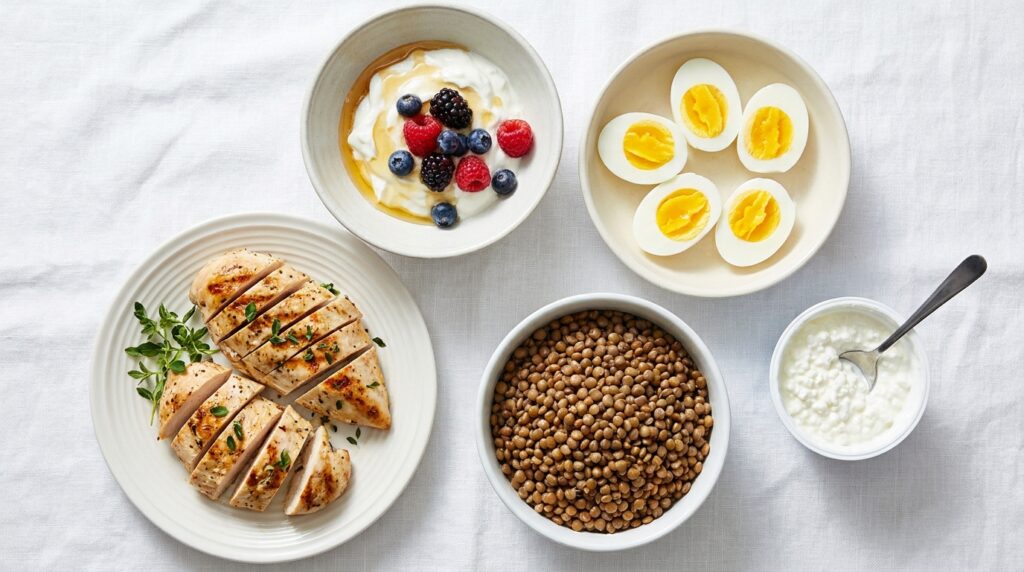
- Greek yogurt (20g of protein per serving)
- Chicken breast (31g per 100g)
- Lentils (18g per cooked cup)
- Eggs (6g per egg)
- Cottage cheese (25g per cup)
Many online weight loss programs now include “protein pacing” — a strategy that spreads protein intake evenly across all meals rather than loading it all at dinner. Research shows this method helps preserve muscle and accelerates fat loss more effectively.
Not sure how much protein you specifically need? An affordable telehealth weight loss consultation can calculate your exact targets based on your body weight, activity level, and health goals.

The Role of Technology in Modern Weight Loss
We are living through the best era in history for weight loss support. You no longer have to go it alone or guess your way through a diet plan.
Here’s how technology can give you a serious edge:
Online weight loss apps like calorie trackers and food journals give you real-time data about what you’re eating. When you can see your macros and calories laid out clearly, it becomes much easier to spot patterns — why you always overeat on Thursdays, or why you feel sluggish on high-carb days.
Wearables track your steps, sleep quality, and heart rate — all of which affect your weight loss progress in ways most people don’t realize. Poor sleep, for example, directly increases hunger hormones. Knowing this helps you prioritize recovery alongside diet.
Online weight loss communities give you accountability and connection. Studies consistently show that social support is one of the strongest predictors of long-term weight loss success. Having people who understand your journey — even virtually — makes a measurable difference.
Affordable telehealth weight loss platforms take this even further. Instead of driving to a clinic and waiting in a waiting room, you can video call a registered dietitian or obesity medicine physician from your couch. They can review your data, interpret your bloodwork, adjust your low calorie diet plan, and even prescribe medication if appropriate — all remotely.
This kind of access used to be reserved for people who could afford expensive in-person programs. Now, affordable telehealth weight loss has made professional guidance accessible to almost everyone.
If you’re managing your weight from home and want to understand the full range of tools available to you, the Weight Loss at Home article covers everything you need.
Practical Step-by-Step: How to Start This Week
You don’t need to overhaul your entire life on day one. In fact, big dramatic changes almost always backfire. What actually works is starting small and stacking habits over time.
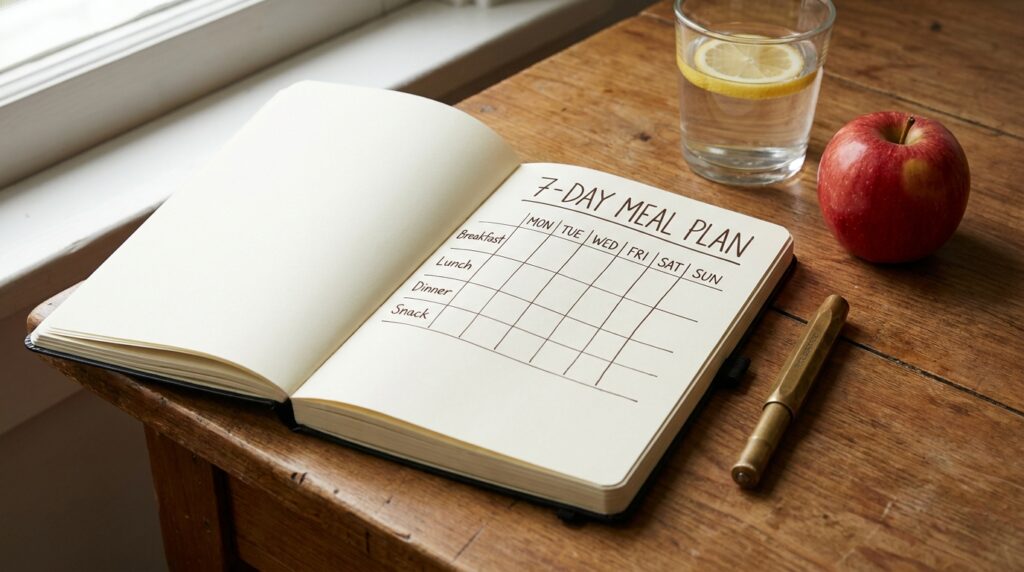
Here’s a realistic plan for your first week:
Day 1–2: Choose your eating pattern. Look at the three options above — DASH, Mediterranean, or low-carb/low-fat — and pick the one that sounds most sustainable for your life. Don’t choose the one that sounds most impressive. Choose the one you can actually see yourself eating for six months.
Day 3: Set up your tracking. Download an online weight loss app and log everything you eat for three days without changing anything. This “baseline” phase gives you incredibly valuable data about where your calories are actually coming from. Most people are genuinely surprised.
Day 4–5: Add protein to every meal. Don’t change anything else yet. Just make sure every meal includes a meaningful protein source. This one change alone often reduces total calorie intake by 200–300 calories without any intentional restriction.
Day 6: Schedule a telehealth consultation. Look into affordable telehealth weight loss platforms and book an initial consultation. Use it to review your baseline data, confirm your eating plan is appropriate for your health history, and set realistic targets.
Day 7: Move your body — gently. You don’t need a gym membership or a brutal workout routine. A 30-minute walk does more for your metabolism and mental health than people realize. Combine it with your low calorie diet and you’re already ahead of most people.
For a more detailed clinical approach to structuring your plan, Healthy Weight Loss offers expert guidance grounded in medical research.

Staying Consistent When Motivation Disappears
Here’s the truth no one likes to hear: motivation is unreliable.
It shows up strong on January 1st and disappears by February. It peaks when you see progress and vanishes during a plateau. You cannot build a successful diet to lose weight on motivation alone.
What works instead? Systems and structure.
- Meal prep on Sundays so that weekday decisions are already made.
- Keep protein-rich snacks visible and junk food out of sight. Your environment shapes your choices more than your willpower does.
- Set a weekly check-in — either with yourself, a friend, or your online weight loss community — to review the past week honestly.
- When you hit a plateau (and you will), don’t panic. Go back to your affordable telehealth weight loss provider and ask for a plan adjustment. A small tweak — adding 10 minutes of walking, shifting calories between meals, or adjusting your macros — can restart progress surprisingly quickly.
- Celebrate non-scale victories. Your clothes fitting differently, sleeping better, having more energy, handling stress more calmly — these are all real, meaningful signs of progress that the scale can’t capture.
Want to move faster without sacrificing health? The guide on how to weight loss quickly offers evidence-based acceleration strategies.
Understanding Your Body’s Signals
One of the most overlooked parts of any diet to lose weight is learning to read your body’s feedback — not just the numbers.
Are you actually hungry or just bored? True hunger builds gradually and any food sounds appealing. Emotional hunger hits suddenly and usually targets specific comfort foods.
How’s your energy? A well-structured low calorie diet shouldn’t leave you feeling exhausted. If it does, you may be too low on carbohydrates or not eating enough total calories.
How’s your sleep? Poor sleep increases cortisol, which promotes fat storage — especially around the belly. It also spikes ghrelin, your hunger hormone. Fixing sleep is sometimes the missing piece in a stalled weight loss journey.
How’s your mood? Severely restrictive diets can cause irritability, brain fog, and anxiety. These are warning signs that your approach needs to be adjusted, not pushed through.
This kind of body literacy takes time to develop — but it’s genuinely transformative. When you stop chasing a number and start paying attention to how you actually feel, sustainable health becomes a lot more achievable.
Choosing the Right Weight Loss Program for You
Not everyone needs the same level of support. Here’s a simple guide:
If you’re just getting started and relatively healthy: An online weight loss app combined with one of the eating patterns above is a great starting point. Free or low-cost apps can track calories, macros, and exercise effectively.
If you have a health condition (diabetes, high blood pressure, high cholesterol): You need professional guidance before starting any major dietary change. An affordable telehealth weight loss consultation connects you with clinicians who specialize in this — without the cost or time commitment of in-person visits.
If you’ve tried multiple diets and keep hitting walls: This is a sign that your approach needs to be more personalized. A telehealth provider can assess whether metabolic adaptation, hormonal imbalances, or medication side effects might be playing a role.
If you want a structured, medically supervised plan: Explore Weight Loss Programs that offer clinical oversight, accountability, and flexible pricing. These programs often combine dietary guidance with behavioral coaching for much stronger results.
Final Thoughts: Your Journey Starts With One Decision
Finding the right diet to lose weight isn’t about being perfect. It’s about being consistent — consistently choosing a little better, every single day.
You don’t need to run a marathon. You don’t need to eat only salad. You don’t need to feel hungry all the time. What you do need is a sustainable eating pattern, a reliable source of support, and the patience to let the process work.
Whether you go Mediterranean, DASH, low-carb, or a customized low calorie diet designed with the help of an affordable telehealth weight loss provider — the most important thing is that you start. And then you keep going, even on the days when it doesn’t feel like it’s working.
Because here’s what the science actually shows: steady, gradual progress beats dramatic short-term results every time. The people who lose weight and keep it off aren’t the ones who did the hardest diet. They’re the ones who found something they could stick to — and stuck to it.
Your body is capable of changing. It just needs the right environment, the right fuel, and the right support.
You have all of that within reach right now. Use it.
Ready to dive deeper? Start with the Weight Loss: The Complete Clinical Guide for 2026 for a full medical overview of what works — and why.
Pingback: penicillin allergy
Pingback: sinusitis congestion symptoms
The point about metabolic adaptation really hit home — I’ve experienced that exact week-three wall where the scale just stops moving even though I’m doing everything the same. It’s reassuring to know it’s biology, not a lack of willpower. On a totally unrelated note, I’ve been using gesture synth to unwind, since it’s a free browser-based instrument you control with hand gestures through your webcam.